Garment returns, buyer complaints and quality disputes rarely originate at the fabric level. They emerge at the finished product stage, where fit, construction, and real-life use determine whether a product performs - or fails.
The focus is shifting: Instead of only testing materials, leading apparel and PPE (personal protective equipment) companies are evaluating the finished product in real-world use.
Make durability measurable and prove it with confidence.
1. What Causes Garment Returns and Quality Issues?
Most product failures occur during manufacturing and garment construction; once products are exposed to real-world conditions, even though individual materials have been tested.
Typical root causes include:
- Inconsistent fit despite the correct size charts
- Weak seams and construction failures
- Dimensional changes after washing and drying (product shrinks or stretches)
- Durability issues under repeated wear and washing
Material tested ≠ product works: Material tested does not mean the product will perform in real use
These are not isolated defects; they are systematic product-level risks that directly impact returns, costs and brand perception.
2. Why Material Testing Alone Is Not Enough
Material testing evaluates the knitted or woven fabric, but not the finished product.
Once assembled, new variables are introduced:
- Fabric behaviour changes during production
- Fit depends on body movement and wear
- Construction creates stress points
- Washing and drying alter long-term performance
A compliant fabric can still result in a non-performing garment
Result:
- High return rates with unclear root causes
- Complaints despite compliant materials
- Lost tenders due to missing performance proof
Turn testing into measurable business outcomes.
3. How Garment Performance Can Be Validated Before Launch
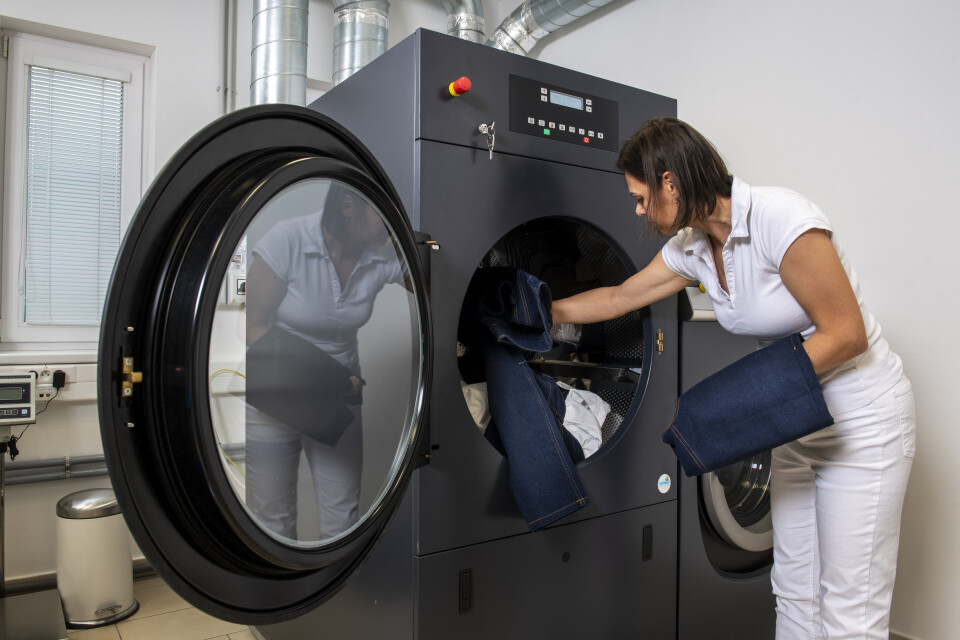
Garment-level validation focuses on the finished product under real-use conditions.
Independent approaches, such as the Fit & Proof Label by OETI - Institute for Ecology, Technology and Innovation, evaluate performance beyond laboratory compliance.
Key evaluation criteria:
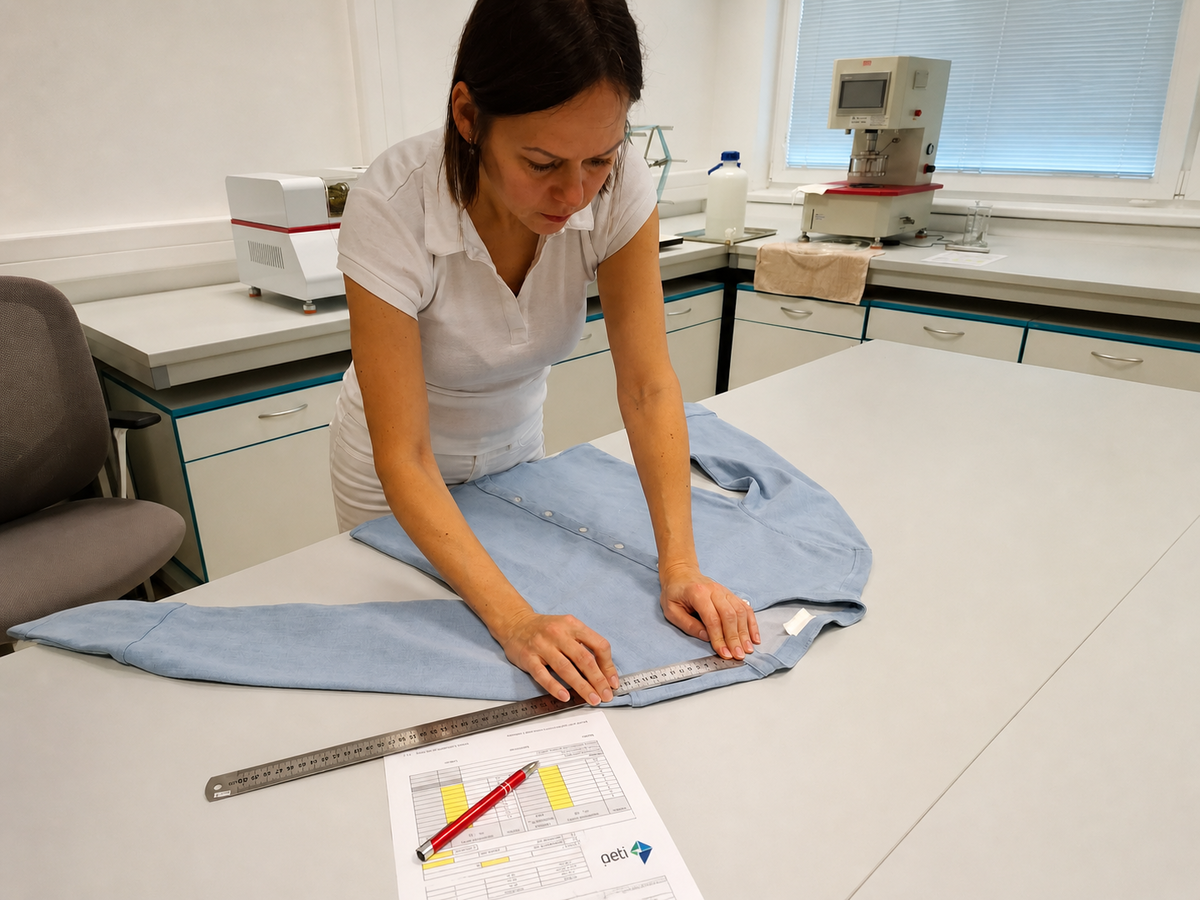
- Fit validation
Tested on real wearers to identify sizing inconsistencies early. - Workmanship analysis
Assessment of seams, closures and construction quality. - Durability testing
Simulation of wear, garment care and abrasion. - Dimensional stability
Measurement of shape retention after care.
Testing delivers actionable insights, not just pass/fail data.
4. Business Benefit of Garment-Level Validation
Garment validation directly impacts commercial performance:
- Reduced return rates
- Fewer complaints
- Stronger buyer confidence
- Improved tender success
- Clear product differentiation
Fit & Proof is a commercial risk-reduction tool.
5. How Garment Validation Works in Practice
A structured process includes the following steps:
- Submission of the product for assessment
- Fit evaluation with representative end users
- Performance simulations, durability test
- Comprehensive technical analysis
- Clear, actionable recommendations
The result: reliable, decision-ready insight before market entry
Minimise the risk of costly product failures after launch
6. When Should Brands Use Garment-Level Testing?
Garment evaluation is most effective when conducted prior market exposure:
- During product development
- As part of pre-launch readiness checks
- To support e-commerce optimisation
- For PPE and workwear compliance
- To ensure export readiness
Shift from reactive quality control to preventive risk management
7. Where Products Typically Fail
Case 1: E-commerce brand
- Issue: High returns
- Cause: Fit inconsistencies
- Impact: Increased logistics costs
Case 2: Workwear supplier
- Issue: Lost tenders
- Cause: Missing durability proof
- Impact: Reduced competitiveness
Case 3: Export manufacturer
- Issue: Buyer complaints
- Cause: Construction issues
- Impact: Reputation damage
It’s not the material that fails; it’s the manufacturing, fit, or construction.
8. Why Independent Validation Matters
Independent testing increases:
- Credibility
- Transparency
- Buyer trust
It enables organisations to communicate verifiable product performance with confidence.
Industry shift: from compliance to performance proof
9. How to Reduce Garment Risk Before Market Entry
- Test finished products, not just materials
- Validate fit with representative users
- Simulate real-life usage conditions
- Identify risks before scaling
- Translate results into targeted improvements
By the time the first return arrives, it’s already too late.
10. How Fit & Proof Supports Garment Validation
Fit & Proof by OETI evaluates:
- Fit accuracy
- Workmanship quality
- Durability
- Dimensional stability
It helps organisations:
- Detect hidden risks early
- Improve product performance
- Provide credible, independent proof
Don’t wait for returns to reveal product weaknesses.
Ensure your garments perform before they reach the market, with independent validation for Fit & Proof from OETI.
Fit & Proof Label
11. FAQ about garment testing and return reduction
What is garment-level testing?
It evaluates the finished garment under real-world conditions, including fit, durability, and construction quality.
Why do returns happen despite testing?
Because most issues arise at the garment level, not the material level.
How can brands reduce returns?
By validating product performance before market launch with the Fit & Proof label.
Is this relevant for e-commerce?
Yes. Fit inconsistency is a leading driver of returns.
Which industries benefit most?
Fashion, workwear, PPE, and export manufacturing.
When should testing be done?
During development and before scaling production.
12. Trust & Transparency
This guide is based on methodologies developed by OETI - Institute for Ecology, Technology and Innovation, a globally recognised testing and certification body and founding member of the OEKO-TEX® Association.
Published: 2026 | Last updated: 2026
Internal & external references
Fit & Proof product page
OETI main website
Key Takeaways
• Most garment issues occur at finished product level
• Material testing alone is insufficient
• Real-life validation reduces returns and complaints
• Independent testing improves credibility and trust
• Early validation prevents commercial risk
• Performance proof is becoming a market standard
At a glance: Performance validation in practice
• Garment failures occur beyond material testing
• Fit, durability, and construction must be validated together
• Independent testing improves trust and differentiation
• Early validation reduces returns and complaints
• Performance validation replaces compliance-only approaches