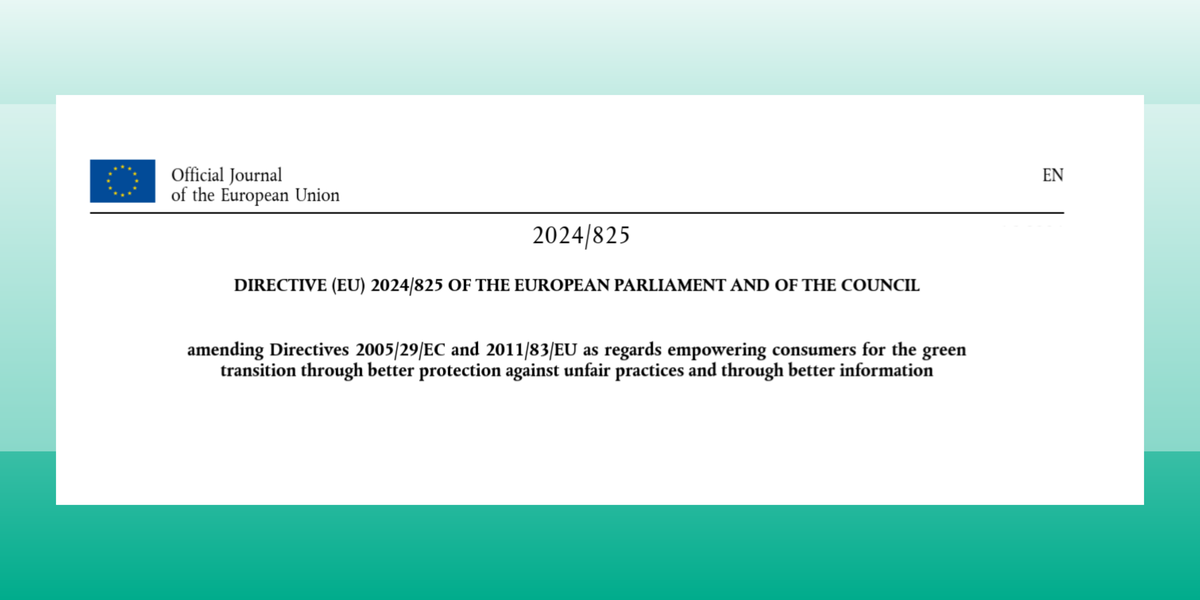
The EmpCo Directive strengthens the protection of consumers against misleading environmental claims. It requires sustainability labels to be based on certification schemes, whereas the schemes' requirements are verified by independent third parties.
OEKO-TEX® addressed these requirements at an early stage and carefully prepared the necessary adjustments, drawing on several independent legal opinions.
At the heart of the reorganisation is a clear separation of standard setting and conformity assessment, through which OEKO-TEX® anchors the independence of its system institutionally. Key measures include the conversion of the existing GmbH into a public limited company (AG), a new Statute of Independence with an Independence Council and an anonymous whistleblowing system, an accreditation agreement aligned with international standards (ISO/IEC 17065), ISO/IEC 17025 accredited certification bodies, and a new decision-making structure with a Board of Directors as the highest governing body.
For customers and partners, nothing will change in day-to-day business: testing, auditing and certification continue unchanged. What is strengthened is the system's demonstrable independence. Companies using OEKO-TEX® labels can continue to substantiate their product claims credibly and with legal certainty.
The global OEKO-TEX® system with its accredited certification bodies remains in place and emerges strengthened from the reorganisation. Standard setting continues to involve independent external experts in a multi-stakeholder process with public consultation.
“Consumer protection begins with trust, and trust only arises when what is claimed is independently verified. With the new structure, we anchor this independence even more firmly and make it transparently verifiable for everyone. This gives our customers, and the people who see our labels in the shop, the certainty that they can rely on OEKO-TEX®,” says Dr Alfred J. Beerli, CEO of OEKO-TEX®.
Press Information OEKO-TEX®/ Zurich / 19.08.2026